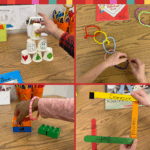


Reading comprehension is more than just answering questions at the end of a story. For young learners, it is about making connections, retelling events, and truly understanding what they read. That is why hands-on comprehension activities can make a powerful difference in your classroom. When students can touch, move, build, and talk about what they are reading, comprehension becomes more meaningful and more memorable. In this post, you will find hands-on comprehension activity ideas that help students interact with texts in meaningful ways while keeping learning fun and manageable for busy teachers.

Check out these related posts:



One simple way to strengthen sequencing skills is by having students retell the most important story events using a chain made from pipe cleaners.
As students retell the story, they focus on one key event at a time. They explain what happened and talk about how that event led to the next part of the story. After sharing each event, students twist one pipe cleaner into the chain. By the end, the completed chain reveals the full sequence of the story from start to finish.

This hands-on activity helps students retell each important story element using a simple cup pyramid. Students retell the story by focusing on one element at a time. As they share each part, they add one mini cup to the pyramid. The six cups represent characters, time, place, problem, solution, and main idea. By the end of the retelling, students have built a complete pyramid that shows all the key parts of the story.
Symbol Ideas for Cups:

This hands-on activity helps students focus on the most important events in a story while practicing sequencing and retelling skills.
Students retell the story by sharing the most important events from the beginning, middle, and end. As they explain each event, they add one brick to their pyramid. By the end of the retelling, the completed pyramid shows the beginning, middle, and end of the story in a clear and visual way.

This hands-on activity helps students summarize the most important parts of a story using the Somebody Wanted But So strategy.
Students begin with four popsicle sticks labeled Somebody, Wanted, But, and So. As they summarize the story, they connect one stick at a time to complete the square. By the end, students have built a simple structure that visually shows the full summary.

This hands-on activity helps students compare and contrast characters, topics, books, and more using magnet wands. It gives students a concrete way to show how ideas can be the same and different.
Students begin with two magnetic popsicle sticks or wands. When they tell how the topics are similar, they stick the magnets together. When they explain how the topics are different, they pull the magnets apart. This physical movement helps make abstract thinking more visible and easier for young learners to understand.

These hands-on comprehension activity ideas are easy to prep, perfect for small groups or centers, and can be differentiated for your readers. Do you have other hands-on comprehension ideas? Please tag us on Instagram here or share inside the Simply Kinder Teacher Facebook Group here.