Do your young learners struggle with reading? Curious about small, but powerful shifts you can make in the way you teach reading? Intimidated about dipping your toes into the water of change? If this sounds familiar, you’ve come to the right place. Keep reading to learn more about strategies for struggling readers. These impactful changes will guarantee success in your classroom.

Check out these related posts:
Science of Reading vs Balanced Literacy in Kindergarten
Tips for Setting Up a Sound Wall
Decodable Readers in Small Groups

This activity pairs well with these Simply Kinder Resources:
Stop Guessing and Begin Decoding
The first and most important thing you can do to support readers in your classroom is to stop teaching them to guess at words. The 3-Cueing system is not an effective way to teach students how to read (look at the picture, look at the first letter, skip the word, and figure out by context). These are not reading strategies and set students up for failure in the future. We want to cultivate reading strategies that are successful and backed by research. Teach them strategies aligned with the Science of Reading (tap the sounds, slide the sounds, break into syllables).
Check out Science of Reading Super Smiley Reading Strategies HERE at Simply Kinder +. This FREE resource includes strategy posters and bookmarks and is Science of Reading aligned.

Explicit Phonics Instruction
A systematic and explicit approach to phonics instruction is necessary. You want to start with simple skills and build towards more complex skills. Students need explicit instruction on phonics skills. They also need meaningful opportunities to work with each skill (decodable readers and word work). Follow your core curriculum scope and sequence. If you don’t have one, we recommend Recipe for Reading as a good starting point.
Word Mapping
Word mapping is when a student breaks down a word into its sounds (phonemes) and maps those sounds onto letters (graphemes). This connection builds phonemic awareness and encourages students to think about all the sounds in a word. This hands-on approach strengthens a student’s ability to decode words. Here is a simple routine to follow when mapping words with students:
- Say the word.
- Tap each sound using your fingers.
- Map the sounds using bingo chips.
- Graph the graphemes into boxes.
- Write the word.
- Read the word.
Check out the Word Mapping Bundle here!

Decodable Texts
Replace leveled and predictable books with decodable readers. Choose books that align and build upon each phonics skill you introduce. This allows students meaningful opportunities to practice decoding and reading words that match the skills they are learning in class. Decodable readers can be incorporated into small groups, given to students for independent reading, included in your classroom library, and sent home for extra practice.
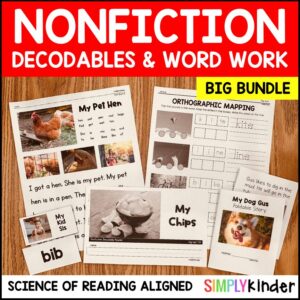
Simply Kinder offers an endless bundle of decodable readers HERE and a new non-fiction decodable readers bundle HERE.
Multi-Sensory Literacy Activities
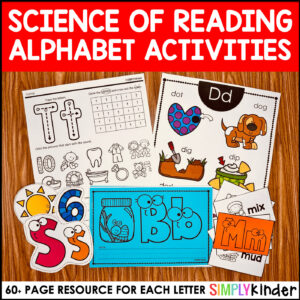
Incorporate multi-sensory literacy activities into your small groups and literacy centers. You will not only engage your students but strengthen their reading abilities. Be sure to choose activities that connect to the phonics skills you are covering or review previous skills. The ideas are endless for including multi-sensory activities. Check out some simple ideas below.
- Incorporate letter tiles and magnetic letters to build words.
- Use rice boxes, playdough, sandpaper, or other textures for tracing letters or sounds.
- Use blending cards for students to tap each sound and practice sliding the sounds together.
- Word Mapping Variations
- Incorporate highlighters to mark vowels, consonants, or syllables.

Prefer to shop individual resources?
Choose what you need from the Simply Kinder shop. These resources are also included with Simply Kinder+ Unlimited.
-
Product on sale
 Nonfiction Decodable Readers with REAL Pictures, Decodables, Passages, Science of ReadingOriginal price was: $225.00.$18.00Current price is: $18.00.
 -
Product on saleAlphabet Activities Kindergarten, Science of Reading Alphabet Posters & MOREOriginal price was: $104.00.$12.00Current price is: $12.00.
-
Product on saleScience of Reading Bundle: Sound Wall, Decodable Readers, Sight Words, & MOREOriginal price was: $880.00.$60.00Current price is: $60.00.

Transition from a Word Wall to a Sound Wall
Take down your traditional word wall and display a sound wall. This valuable tool will be referenced during phonics, reading, and writing. Students will work with you to unlock sounds systematically. A sound wall will strengthen articulation and the connection between sounds and print. Sound walls tie directly into your explicit phonics instruction and are meant to be reviewed daily. We love that students can have easy access to their personal sound walls found HERE in the Sound Wall Bundle from Simply Kinder.

Change is never easy, but making one small change now can be the difference your students need in their reading journeys. What Science of Reading aligned strategies are you implementing to help your struggling readers? Please make sure to tag us on Instagram here or share inside the Simply Kinder Teacher Facebook Group here!